
Australia sure is a paradise when you picture all the lovely beaches you could go swimming and surfing in, the fuzzy Koalas and cute Kangaroos to see, and the amazing wildlife to frolic in. But hate to break your heavenly visualization of the country, you should be aware that it also has a kick of bloody hell in it as Australia is the home to some of the deadliest species existing on Earth and can put your life in danger. Land and sea, every nook and cranny of Australia aren’t safe from either the little creepy crawlers, big beasts, or worse..all of them together. And unfortunately, not all of us are like the brave late Steve Irwin who could play, wrestle, and hang out with the ‘residents’ of the wildlife like it’s no biggie. For most of us, we will probably not be greeted with a ‘Hello, mate’ from the Australian wildlife, more like a ‘Goodbye, mate’ if we’re not careful enough. Sure, Australia is pretty much a wonderful place but there’s no denying the danger that lurks within its wildlife that you may encounter. So, to give you a heads up, here are several things you should watch out for.

Box Jellyfish
Whoever said that danger only lies in the deep waters? Australia’s dangerous box jellyfish aren’t shy in swimming in the shallow waters where humans are likely to be too (thinking they’re far away and safe). With their translucent skin making them seem invisible in the water and having one of the most painful animal stings in the world -an encounter with them can be fatal. A 10-year-old Rachael Shardlow in 2010 experienced the terror of the box jellyfish, luckily she survived.

Box Jellyfish
Funnel Web Spider
Wouldn’t it be nice to freely walk in a place where you know it’s safe? When a peaceful stroll is ensured with the presence of someone like the friendly neighborhood Spiderman. But that’s only in the comic book world. In real-deal Australia, spiders are everywhere and not all of them are friendly (Yikes!). Especially the funnel-web spider that is one of the most venomous on Earth. A bite from them won’t turn you into a superhero but could instantly make you an angel in heaven -that’s how fatal it can be.

Funnel Web Spider
Saltwater Crocodiles
In northern Australia, saltwater crocodiles lurk and sure do the ruling in swamps, rivers, and estuaries. Well, of course, they’d dominate when they’re ferocious, big (males can reach 4400 pounds and be more than 20 feet long), and incredibly fast hunters. Not forgetting to mention the scariest thing; they aren’t even picky eaters and can munch on anything they can get their sharp 64-68 teeth in..humans not spared.

Saltwater Crocodile
Kangaroos
Cute as they may seem, you’re not likely to get fluffy warm hugs and cuddles from Kangaroos. You are to expect, though, either a kick, a bite, a punch, or worse, a combo of everything when they see you as a threat. Male kangaroos, for example, fight with other males to assert the ‘ownership’ of the female, and if they can go violent with their fellow kind, humans are no special exception if you meddle with their affairs. Same goes with female Kangaroos carrying joeys in their pouch, they’re too cute but you have to resist approaching them as they will not hold back a fight to keep their little ones safe.

Kangaroo
Cone Snails
When will we ever learn to never judge a book by its cover? We know snails are slow and thus can rarely do us any harm, but Cone Snails shouldn’t be overlooked. They have a radicular tooth that can launch like a harpoon, likely to hurt your foot when you step on them. What’s even more alarming is that their stings can be painless and noticeable only until you’ll notice changes in your vision and speech -it may be too late already.

Cone Snails
Giant Centipedes
Tiny creepy crawlers like centipedes are already enough to give you goosebumps. What more when you see a giant centipede about 6¼ inches crawling your way and ready to sting you with a pair of venomous claws that put people to several days of pain and agony? Horrifying, right?

Giant centipedes
Trash can-sized crabs
When we think of crabs, we start getting a frenzy over the fact that they are delicious seafood served in our platters. We get to break open their shells and eat their scrumptious meat. But, did it ever come across your mind that a crab could do the same to humans; break their bones? Let us tell you about the coconut crab. It’s the largest land-living arthropod in the world and is the crab to avoid if you don’t want any broken bones.

Trash can-sized crabs
Redback Spider
The redback spider, yet another one of the most venomous in Australia. What’s worse than being killed in a flash? Getting killed slowly -where you’ll have to witness a terrifying process done on you before actually dying. Small insects caught by the redback spider first get paralyzed with their venomous fangs are wrapped in silk, body, and head bitten repeatedly until life is sucked out of them. Gruesome. As for humans, getting bitten by the redback spider could be so serious that antivenom is needed to reverse its symptoms. And if you think you wouldn’t have to worry about experiencing something like this since they’re probably out in the wild, we’re sorry to tell you but they are likely living inside houses like a housemate you never were aware of.

Redback Spider
Snakes eating whole crocodiles
When getting bitten by a venomous snake is already sending chills to your spine, how about getting swallowed by it as a whole? Sounds impossible right? (since snakes are smaller than humans). But we’re not telling tall tales here! In 2014, a shot of a python swallowing a crocodile made the world realize not to underestimate creatures smaller than us.

Snakes eating whole crocodiles
Cassowaries
We could say that it’s safer when birds are up in the air -because humans would hardly encounter them (unless you’re Superman, able to fly high in the sky). But the Cassowaries -a cross between a turkey and an ostrich found in rainforests of Australia, are the world’s most dangerous bird listed in the Guinness World Records that are unable to fly and therefore live among us. Can grow 6 feet tall, run at 31 mph, jump to heights of 5 feet, slice you with a single kick and are incredible swimmers too, you wouldn’t want to anger an athletic beast like the Cassowary because winning against them would be as hard as winning in the Olympics!

Cassowarries
Red-bellied black snake
As its name says, the red-bellied snake in Australia is easily distinguished by its red underbelly. You don’t even need to be out in the wild to encounter them, these creepy crawlers like to hang out in urban areas and if you’re unlucky enough, they’ll visit the inside of your shoes. Try to annoy it and it will show its red stomach (what better color to express anger, huh?) to warn you he could readily bite you. Although the red-bellied snake’s bite isn’t fatal, it’s still painful enough to have you visiting the hospital.

Red-bodied Black Snake
Great White Sharks
You could say great white sharks are indeed great if you’re one yourself. But for us humans who can fall prey to these dangerous underwater beasts, we won’t be able to say they’re great after all -especially when they could easily kill us. Having a huge body, 222 razor-sharp teeth, and endowed with the ampullae of Lorenzini that helps them detect anything with a pulse, it’s easy for them to find something to munch on; fishes, mollusks, or maybe that cool surfer drifting through the waves and unaware of the danger.
Great White Sharks
Snake eating devils
We’ve told you about the mind-blowing Python able to eat a crocodile as a whole, but did you hear about this Python who’s managed to kill a flying fox? For a land crawler to successfully catch something that flies and out of its league (or so we thought), the Python impresses us with its incredible hunting skills. Let’s not be so scared of them now, they’re helping us with pest control anyway. (According to the New South Wales Government website, flying foxes are known to carry the Australian Bat Lyssavirus and Hendra Virus that can be potentially risky to our health)

Snakes eating Devils
Stone fish
When you’re out in the wild, you have to keep in mind that not everything is what it seems in your eyes. A harmless rock underneath the waters? Don’t get fooled. It could be a stonefish, one of the venomous fish ever known just casually camouflaging within rocks. As dangerous as a landmine, you have to be careful not to step on them or else you’ll experience extreme pain or worse, die of it. Stone fishes, on the other hand, make ‘dangerous’ and ‘delicious’ (an unlikely pair) possible. Yes, Stone fishes can be eaten safely as heat dissolves its venom.

Stone fish
Strychnine Tree
The apple tree in the Adam and Eve story doesn’t even come close to the dangers of the Strychnine Tree. In the bible story, the apple tree is evil but it didn’t go physically harming Adam nor Eve. The Strychnine tree is a different evil. It grows orange delicious-looking fruits that are housing toxic seeds that can affect the nervous system, cause convulsions, and be fatal. Moreover, even its bark and blossoms are poisonous too! What a total (dangerous) package.

Strychnine Tree
Pool-sized Ball Hail
Not only insects and animals of wildlife can harm people. Mother Nature can cause havoc at times. An Imgur uploaded the image below of fallen hail as big as the size of a pool ball in 2013. Imagine getting trapped in a hailstorm with huge balls such as that, children or small animals would be in big trouble!

Pool-sized Ball Hail
Dingoes
Dingoes are the dogs of the wild but don’t consider them as ‘man’s best friend’ like your furry friends at home (even if they are of the same kind and level of cuteness). There had been reports of dingoes attacking tourists for mistaking them as dogs and attempting to feed them. The dingo, although not the most dangerous animal in Australia, should not be given the blind eye. They are notorious for attacking livestock and farm animals, much to the extent that a 5614 km fence was constructed in Southeast Australia because of them.

Dingoes
The Outback
Is it safe to go for long drives in Australia? Apparently, not. Even if you could be harm’s away from wild critters and beasts or secure inside your car, there’s still one threat that’s going to test your survival skills -if you didn’t come prepared. We’re talking about Australia’s outback, a spread of hot and dry land which is remote and uninhabited. You’d have to pack the right amount of food, water, gas, and other essentials because once you run out of any of them, unlike usual roads with mini-marts or gas stops available, the Australian outback has nothing to help you with. Stressful enough? Just to add, you won’t even get to call for help as there won’t be any cellular signal there. Survival favors those who came prepared.

The Outback
Irukandji Jellyfish
Small and terrible, the Irukandji jellyfish that’s almost as minuscule as the tip of a matchstick reminds us not to underestimate the link between size and danger. This type of jellyfish, usually living in the waters of North Australia can grow to about a cubic centimeter, and is capable of injecting venom with its stingers to humans who come close in contact with them. It could immediately send you to the hospital with symptoms such as muscle cramps and nausea. Stay away from this small creature if you don’t want big trouble.
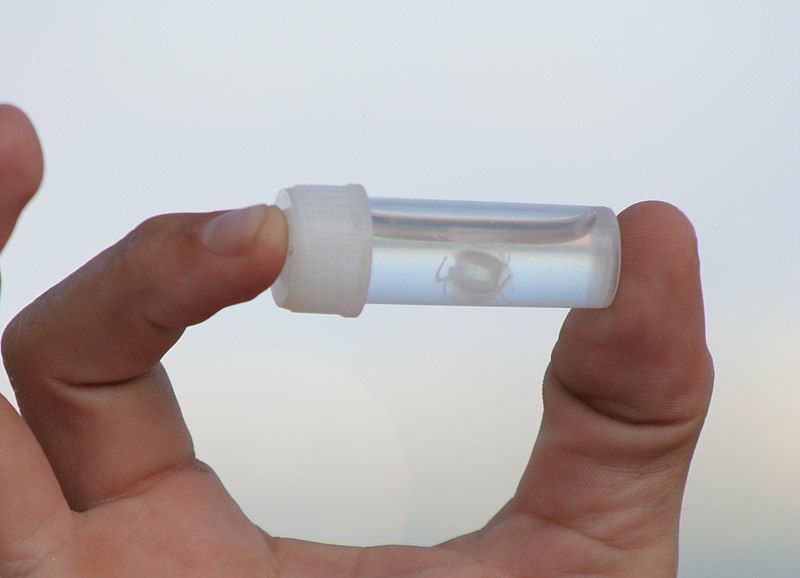
Irukandji Jellyfish
Angry Koalas
Koalas are usually calm creatures of Australian wildlife, but they are no different than other creatures. Once angered, they lose their reputable chillness in the animal kingdom -but hey not blaming them? Even Koalas lose their cool sometimes. The picture on the right that made a buzz on the internet isn’t how Koalas look like when angered. It’s just a photoshopped version of the original image (left) shot and posted by Flickr user, ‘Oz-Dr Dolittle’. Real angry Koala or photoshopped angry Koala, it’s better to be aware that an angry anything is harmful in whatever way.
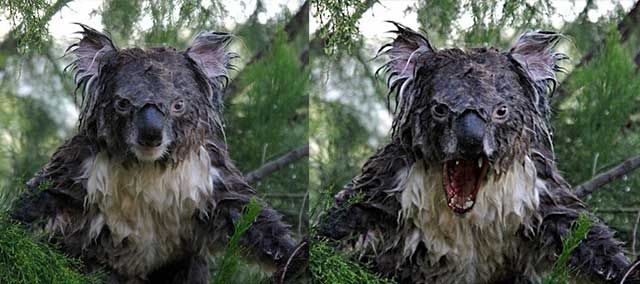
Angry Koalas
The Heat
Australia is no place for a Vampire to live in. The sun shines brightly and too much in this country, causing a temperature as high as 122° F. It could get so hot that an egg could be fried on concrete! The alarming heat temperature increase in Australia is linked to climate change. Health officials of Victoria, Australia were alarmed when they discovered that about 374 people died due to an extreme week-long period of the heatwave in January 2009. So, if you’re hoping to visit Australia in the summer season, expect and be prepared for a temperature that will make you feel like an egg on a hot frying pan.
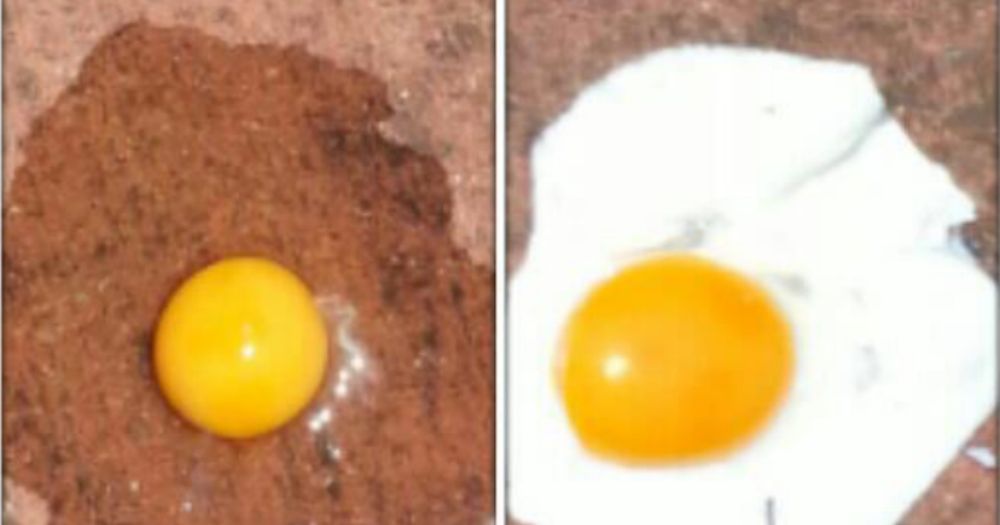
The Heat
Easter Brown Snakes
Oh, Australia, home to the world’s second most venomous land snake, the Eastern Brown Snake. Usually found in highly populated areas across eastern Australia, this deadly slithering creature is behind 21 deaths since the year 2000 (statistically, that’s more than one year!). A bite from this snake can inject you with 2-6mg of venom that’s likely to give you a cardiac arrest or uncontrolled bleeding within just 15 minutes! If you don’t want to die fast, stay away from them.
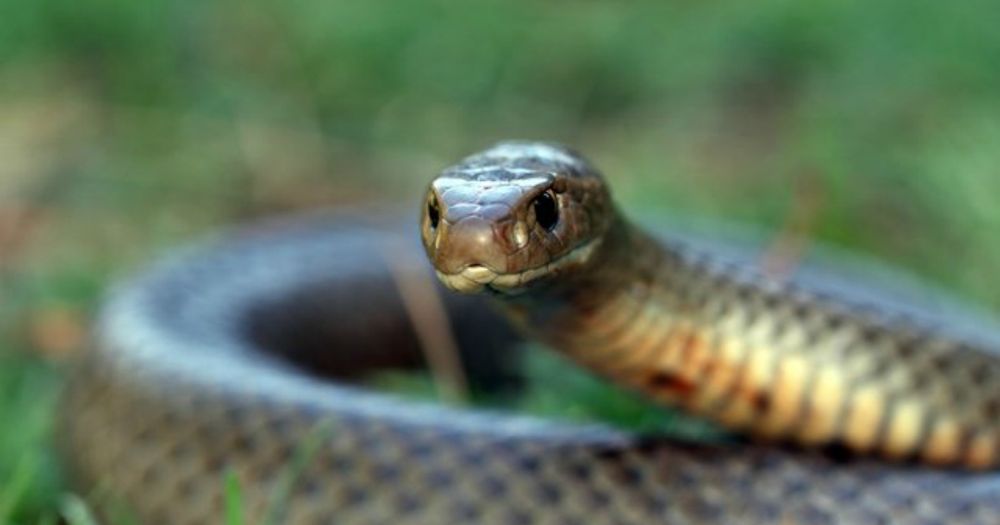
Eastern Brown Snakes
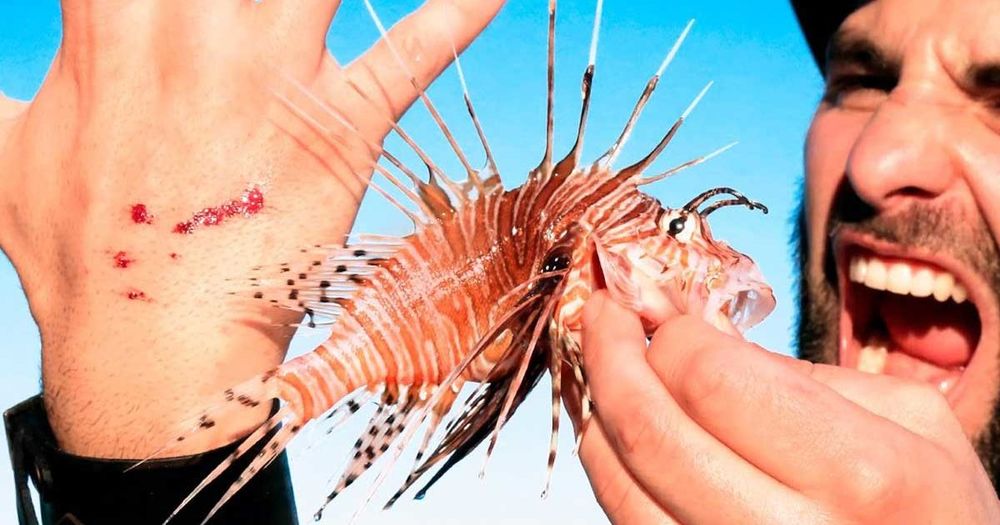
Lionfish
There’s already a ton of venomous fishes in the waters of Australia, and here’s yet another one to watch out for -the Lionfish. You mess with them and they’ll mess with you too using the venom in their fin rays that will give you immense pain, vomiting, and if you get it worse, paralysis even!
Lionfish
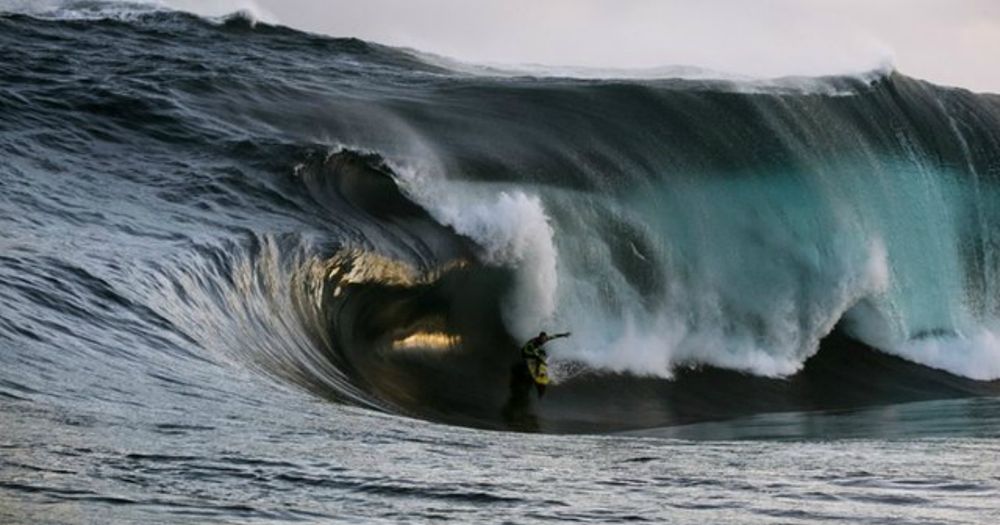
The Waves
Australia is popular for its high waves that are just perfect for surfing, but sometimes it could get too high, swelling up to 40 feet, even having a wave on top of another. And if you’re a surfer coming across these waves, it would be like a big wall made of water falling on you and dragging you far and deep -where the other underwater dangers may lie, like sharks perhaps. Good luck!
The Waves
Taipan Snake
This probably won’t surprise you, or anyone else, but the most venomous snake in the world is indigenous to Australia and lives in the desert. On the bright side, however, it tends to slither away from humans rather than fight them. Only a handful of people have been bitten by this snake. Yes, they survived. All the same, even with good travel insurance, you wouldn’t want to test the snake’s highly toxic venom.

Taipan Snake
Blue-Ringed Octopus
These octopuses look great in a fish tank, or even better, in nature – but do not touch them. The ball-sized creatures bite and are highly venomous. Oftentimes, the sting is fatal. The body shuts down and becomes increasingly paralyzed, making breathing impossible. On top of that, there’s no known anti-venom. All the same, treating a bite is possible by helping a patient breathe until the toxin is removed from the body.

Blue Ringed Octopus
Common Death Adder
While the common death adder is slightly less venomous than the Eastern brown snake and Coastal Taipan, it’s still in the top ten most venomous snakes in the world. In fact, this snake has the longest fangs of any Australian snake, so that’s fun. The most dangerous part about the snake – aside from its venom, of course – is that it relies on camouflage to protect itself rather than evasion, so when faced off with a threat, it will bite.

Common Death Adder
Bull Shark
The bull shark is found all over the world in coastal waters but you’re most likely to come across one in estuaries, harbors, and rivers. Aside from it being a good scavenger, it’s a good predator as well, so you don’t want to be swimming near any dead whale carcasses. What makes it even more dangerous is that you have a higher chance of encountering one in Australia. In fact, you might even catch a glimpse of one in Sydney Harbor or the Brisbane River. Some have even washed up on city streets after storms.

Bull Shark
Tiger Shark
While the tiger shark is smaller than the great white shark, it is, however, more aggressive. The shark is named for its stripes running down its back. This animal will consume just about anything it comes across, including bottles, tires, clothes, and yes – even humans. This beast is normally found in deep, subtropical waters, but it will often swim near the Great Barrier Reef. To sum up, Australia has no shortage of angry sharks that will attack when provoked.

Tiger Shark
Huntsman Spider
The huntsman spider is spread throughout Australia, unfortunately. The large, hairy spiders tend to jump out of curtains which make them very capable of provoking phobias. Although they look like something straight out of a horror movie, they are rather sheepish and normally don’t bite. Not to mention, their venom isn’t dangerous to humans. All the same, their appearance and behavior make them deadly in another way: they’ve been known to cause panic attacks and even car crashes when they scare drivers by popping out of dashboards and sun visors at random.

Huntsman Spider
Honey Bee
A lot of crops, such as apples and cotton need honey bees in order to survive in Australia. All the same, these bees have become of the biggest threats to humans there. Back in 1822, the bees were brought over by European settlers, and by now, they’re responsible for one or two deaths a year. While that might not seem like much, it does make them more lethal than sharks in the country! Why are they so deadly, you ask? Well, an estimated 3% of Australians are allergic to the venom honey bees produce.

Honey Bee
Stingray
Stingrays have gotten a rather bad reputation after the death of Steve Irwin. However, they’re more passive than aggressive. A distant cousin of the shark, stingrays are famous for being naturally curious and even playful. The biggest danger they pose is their spear-like tail. They’ve only been responsible for two reported deaths in history, including Steve himself. All the same, it’s best to be careful if you happen to be around them.

Stingray
Tasmanian Devil
This species is very well represented in the Looney Tunes, surprisingly enough. The Tasmanian devil is extremely volatile. As the world’s largest carnivorous marsupial, this animal is known for its maniacal display of teeth-baring and spinning, accompanied by growls. With its large head, razor-like teeth, and powerful jaws, it has one of the strongest bites in the animal kingdom. All the same, human attacks are rare. However, they will attack when provoked.

Tasmanian Devil
Cyclones
Thanks to Australia’s warm sea-surface temperatures and unstable weather, it’s a place where it experiences plenty of extreme weather events. On average, between 10 and 13 tornadoes and hurricanes tend to hit Australia in each season. Don’t be surprised if you happen to go there and the weather starts getting really weird. To Australians, that’s totally normal and part of their yearly seasonal events.

Cyclones
The Gympie Gympie
In case you weren’t convinced just about everything in Australia is set out to hurt you, there’s the Gympie Gympie. It’s a plant that grows exclusively in the north of Australia. It’s the most virulent species of the urticaria plant. Other names this plant happens to have is ‘the stinging brush’, ‘the Gympie stinger’, and ‘the suicide plant’. Why does it have such gruesome nicknames you wonder? Well, one scientist described the sensation of being stung by the plant as ‘being electrocuted and burned by acid at the same time.’ Lovely.

The Gympie Gympie
Forest Fires
Oftentimes, Australia is ravaged by terrible forest fires that eucalyptus has evolved to survive after a fire. While it’s a highly flammable plant, after the fire, the burned seeds tend to bloom in the ashes. It’s a process that it goes through many times, unfortunately, seeing as Australia is very prone to bushfires. As a matter of fact, Australia is one of the most fire-prone regions in the world. Still, these fires cause serious property damage along with the loss of both human and animal life.

Forest Fires
White-Tailed Spider
The poison of the other spiders we’ve mentioned might be life-threatening (aside from the huntsman). However, a bite from the white-tailed spider is not. All the same, these spiders typically carry bacteria, which can cause inflammation in the bite area. Whenever anyone happens to be bitten by one of these spiders, they should always make sure to go to the hospital for a consultation as soon as possible.

White Tailed Spider
Mosquito
It might surprise you to read this, but mosquitos are actually one of the most dangerous animals in Australia. Lots of people have gotten Dengue fever, otherwise known as dandy or Breakbone or break-heart fever. People who are infected with the dengue virus will begin feeling sick 3-10 days after the bite. It mostly will feel like the flu, only more intense. The discomfort often will disappear after roughly 7 days. All the same, people infected should see a doctor.

Mosquito
Freshwater Swim Holes
Going for a swim in a freshwater swim hole might sound like a grand idea, but you should think twice about it. Aside from the fact that it’s unsafe due to the lack of lifeguards in the vicinity, swim holes in Australia are rather dangerous. The currents can be swift and hidden in larger rivers, posing a risk for swimmers. Not to mention, diving or jumping in can result in serious injuries since it can be hard to tell the depth of the water before going in. As if that weren’t enough, there could be rocks hidden under the surface of the water.

Freshwater Swim Holes